--- None ---
Clowning for Christ by Randy Christensen
Clowning for Christ by Randy Christensen
Couldn't load pickup availability
The title says it all
Share
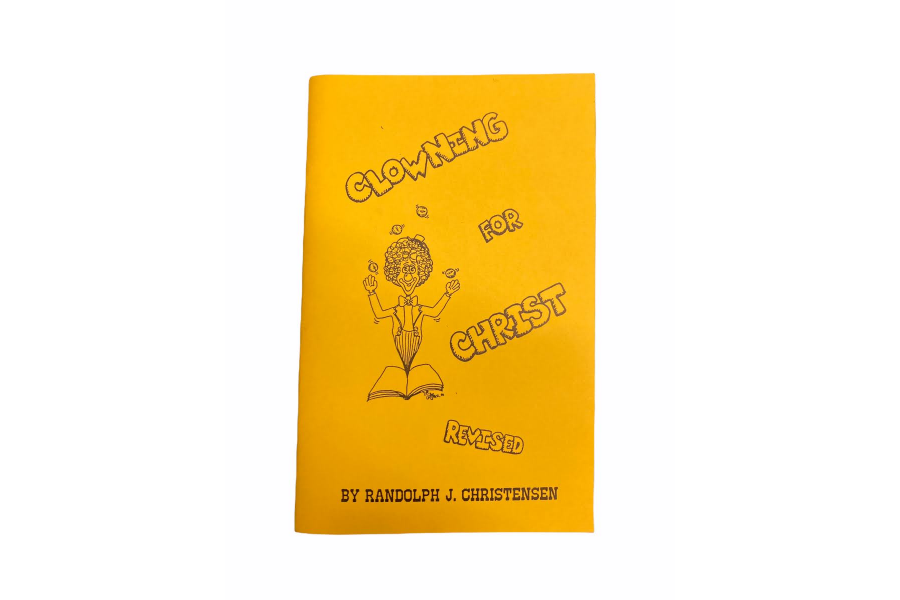
Clowning For Christ (Revised)
by Randolph J. Christensen. (Unknown Binding, 1986).
Author and Work
Randolph Christensen, or Randy as he is known by close friends and colleagues, is an accomplished clown, ventriloquist, musician, comic mime, juggler, puppeteer, stilt walker, and in-demand speaker on the national circuit. He currently performs out of Minnesota. Randy was awarded Master Clown by the World Clown Association for excellence in performance and was the 2024 recipient of the WCA Lifetime Achievement Award. Christensen has authored over twenty books on clowning, children's ministry, and variety arts method, and Clowning for Christ is one of them.
Content
In this book, Randy focuses on the "basics" of clowning without all the frills and "newfangled ideas" (p. 5). He gives a brief history of the Christian clown, describing how clowns in church settings were seen as "spiritual leaders" until the late 8th century when the clown characters were removed from the Church. Christensen paints the picture of the Christian clown as an innocent, Christ-like burden bearer (p. 7). In chapter two, "Characterization," the author explains that there is much more to the clown's character than makeup (p. 12). Great clowns develop their ever-changing and evolving character over time (p. 14). After a short chapter on makeup tips, Christensen dives into "Gospel Skits" (pp. 22-27) by first describing and defining them and then explaining the key elements and patterns that comprise them. The remainder of the book, aside from the author's powerful conclusive exhortation, is composed of teaching skit samples for students to adapt and utilize. The author signs off with a reminder that it all means nothing without love.
Strengths
Christensen warns against bad clowning in his Characterization chapter. This is a warning that should be taken to heart by magicians as well. You cannot buy a magic trick, perform it without rehearsing, and become a magician any more than you can put on makeup, neglect character development, and become a clown. The author suggests that writing an abridged autobiography might help develop one's clown character by first becoming aware of the "events and circumstances that have shaped his own character" (p. 16).
This text is full of insightful quotes:
• "The clown is a servant, humbly seeking good for others, not for himself" (p. 7).
• "A good clown doesn't just make people laugh. He allows emotions to be released…it may be laughter, or it may be weeping" (p. 7).
• "…though I am the greatest clown in the world and can juggle bowling balls while standing on my head on top of an egg, but have not love, I am nothing" (p. 52-53).
Weaknesses
There are not many weaknesses here. The book is small but packs a big punch. Honestly, if I had to point out something, it would be the list of opportunities for clowns on page 50. Many of those opportunities are dated and give away the age of the book. Many still apply, if the author wrote the book, or revised it again, that list would look very different in 2025. Like I said, not many weaknesses to complain about in this work.
Summary
Everyone who does not understand clowning, particularly Christian clowning, should read pages 6-11 in Clowning for Christ. Here Christensen opens the door to the reader's understanding of clowns, showing them to be so much more than is seen on television. There is a great deal to be learned from clowns - by all performers.
by Joey Byers
Associate Editor, The Voice
(Official Magazine of the International Fellowship of Christian Magicians)